Things to Do in Sucre in September
September weather, activities, events & insider tips
Low Season · Budget Friendly
September Weather in Sucre
Long-run averages for September
72°F (22°C)
High Temp
45°F (7°C)
Low Temp
1.0 inches (25 mm)
Rainfall
54%
Humidity
13
Sunny-Day UV
⚠ Respect the extreme UV at altitude. Sucre sits at 2,810 m (9,219 ft). Thinner atmosphere filters significantly less ultraviolet radiation than at sea level. Sunburn can strike in under 30 minutes of direct midday exposure. Even on overcast days. Reapply high-SPF sunscreen constantly. Wear long sleeves for extended outdoor time.
⚠ Prepare for rapid evening temperature drops. The shift from 22°C (72°F) afternoon to 7°C (45°F) night happens within roughly an hour of sunset. Dress in removable layers. Carry a warm jacket even when the afternoon feels comfortable.
⚠ Understand altitude sickness risk. Headaches, nausea, insomnia, and shortness of breath affect most travelers arriving from below 1,500 m (4,900 ft). Take the first day slowly. Avoid alcohol for 24 hours. Drink significantly more water than normal.
Making the most of September in Sucre? Browse tours and activities in Sucre on GetYourGuide.
Is September Right for You?
Weigh the advantages and considerations before booking
Advantages
- + This single event justifies timing your trip for this month. Plan around it.
- + September hits the sweet spot between dry winter and the approaching wet season. Clear skies dominate. Afternoons hover around 22°C (72°F). The entire month sees just 25 mm (1.0 inch) of rainfall. Trek the Maragua Crater in comfort. Walk the colonial center without ducking under awnings.
- + Visitor numbers drop sharply after August's peak. Waits shrink at Casa de la Libertad. The Mirador de la Recoleta has breathing room. Guesthouses open up. No need to book months ahead.
- + Low humidity of 54% and warming days make September one of the most comfortable months for Sucre's hills. The cobblestones sit at 2,810 m (9,219 ft). That altitude leaves you winded in any weather. September makes it easier.
Considerations
- − Sucre sits at 2,810 m (9,219 ft). September's dry, thin air hits lowland arrivals hard. Expect headaches. Shortness of breath. Disrupted sleep for the first day or two. Acclimatize in La Paz or Potosi first. Or suffer.
- − Nights plunge to around 7°C (45°F). Days climb to 22°C (72°F). That 15-degree swing catches travelers off guard. Layering is essential. Most people underpack. Don't be most people.
- − Dry air at altitude cracks lips. It irritates nasal passages. It dehydrates you faster than you'd expect. Nosebleeds are common among visitors during their first few days. No amount of water feels like enough. Drink more anyway.
Settled on September? Compare hotel prices in Sucre for your dates on Trip.com.
Best Activities in September
Top things to do during your visit
September marks the pivot from Bolivia's dry winter into the first stirrings of the transitional season, and Sucre feels it in the air. Daytime temperatures climb to around 22 degrees Celsius. Warm enough to wander the city's chalk-white colonial streets in a light jacket. Nights still drop to a brisk 7 degrees that sends diners indoors and fills courtyard restaurants with the smell of wood-fired ovens and simmering peanut soup. Rainfall is modest, averaging about 25 millimetres for the entire month, a fraction of the summer deluges that arrive from December through March. That dry clarity means the sky over Sucre stays a deep, saturated blue most days, the kind that makes the whitewashed facades of the historic center glow almost phosphorescent in the midday sun. The city hums at a different tempo in September compared to the peak tourist months of June and July. University students have returned to the Universidad San Francisco Xavier, filling the cafes around Plaza 25 de Mayo with espresso steam and conversation. The Mercado Central runs at full local volume, its stalls stacked with papaya, chirimoya, and the sharp green scent of freshly torn cilantro, without the guided-tour crowds that slow the aisles during high season. For travelers weighing whether Sucre is worth visiting in September, the answer sits in this specific balance: the weather cooperates, the cultural infrastructure operates without interruption, and the colonial capital feels less performed and more lived-in than during busier windows. Sucre at this time of year rewards the unhurried, those willing to sit in a second-floor mirador with a singani sour and watch the late-afternoon light turn the Cordillera de los Frailes from ochre to violet. September also sits at the threshold of the salt flat mirror season. The Salar de Uyuni, reachable by bus or flight from Sucre, begins to see its first shallow water accumulations from late-September rains to the north, which means the famous reflective surface starts to appear in patches rather than the full-lake mirror of January and February. For travelers who want to combine Sucre's colonial architecture, food, and trekking with a salt flat excursion, September offers the rare possibility of catching early mirror conditions without the heavier rainfall and road closures of the wet months.

Uyuni Salt Flat 1 Day Tour +Sunset in the Salt Water Region with Mirror Effect
guided_experienceThe one-day Uyuni Salt Flat tour with sunset positions you on the world's largest salt plain as the afternoon light rakes across an expanse so white and so flat it confuses your depth perception entirely. The vehicle crosses hexagonal salt tiles that crunch underfoot like packed snow, and when the guide stops at the salt water region toward evening, the thin film of brine transforms the ground into a mirror that doubles the sky, clouds drifting beneath your feet in a hallucination of perfect symmetry. The return drive after sunset crosses the flats in near-total darkness, the Southern Cross sharp overhead in air so dry and cold you can taste the mineral edge of the salt on your lips.
Standing on a mirror made of sky and salt at sunset, where the horizon dissolves completely, is a spatial experience that exists nowhere else on Earth at this scale.
Insider tip: Request the afternoon departure that reaches the salt water region by 16:30 rather than the standard schedule, as the mirror effect intensifies in the lower-angle light and the crowds from La Paz day trips have already turned back.
This month: Late September occasionally brings the first shallow water accumulations to the Salar, which can produce partial mirror effects even outside the traditional November to March wet season. Conditions are unpredictable at this transitional moment. But the dry-season salt polygons are guaranteed and impressive in their own geometry.

Uyuni Salt flat 2 day+sunset at Salt Water Region + Mirror effect
otherThe two-day Uyuni Salt Flat itinerary adds what the single day cannot: a night on the altiplano. The first day crosses the salt crust to Isla Incahuasi, where thousand-year-old cacti bristle from a rocky outcrop surrounded by white nothing, their silhouettes against the evening sky like ink drawings. Sunset at the salt water region delivers the mirror. But sleeping near the flats means you also get the dawn version, when the brine surface catches pink and tangerine light and the silence is so complete you hear your own pulse. The second day pushes into the Eduardo Avaroa Reserve, through landscapes of red-brown desert and turquoise mineral lakes rimmed with white borax, the sulfur smell of fumaroles carried on a wind that cuts at 4,500 metres.
Overnight on the altiplano transforms the salt flat from a photograph into a felt experience, the cold, the silence, the slow rotation of unfamiliar constellations directly overhead.
Insider tip: Pack a balaclava or fleece neck gaiter for the second morning at high altitude; September nights near the Salar drop well below freezing, and the basic refugios provide blankets but not always sufficient warmth for the predawn excursion.

Traditional Bolivian Cooking Class w/ Cocktail Making by La Boca del Sapo, Sucre
foodLa Boca del Sapo's cooking class in Sucre begins not in a kitchen but in the Mercado Central, where the instructor walks you through stalls heaped with freeze-dried potatoes called chuño, glossy aji amarillo peppers, and slabs of charque, the wind-dried beef that has fed the Andes for centuries. The smell is agricultural and immediate, raw peanuts and dried corn and the faintly sweet funk of fermented chicha in clay vessels. Back in the kitchen, you grind peanuts into sopa de mani by hand, the paste thickening into a soup so rich it coats the back of a wooden spoon, then learn to fold salteñas, the baked empanadas whose sweet-savory juice bursts when you bite through the braided seam. The session finishes with cocktail making, the sharp citrus of singani mixed with fresh lime and ginger, Sucre's answer to a pisco sour.
This is the fastest route to understanding Sucre's food culture from the inside, ingredient sourcing to plate, taught by people who grew up eating what they cook.
Insider tip: Book the morning session rather than the afternoon. The market walk happens when vendors are fully stocked and the produce is at its freshest, and you eat your finished meal as lunch rather than a late dinner.

1 Day Trek in the Crater of Maragua and Inca Trails in Sucre
adventureThe day trek to the Crater of Maragua leaves Sucre's paved streets behind within an hour, descending into a geological amphitheater ringed by striated red and cream sandstone walls that look like sedimentary layer cake sliced open by erosion. The trail follows Inca-era stone paths that cling to the hillside, worn smooth by centuries of foot traffic, passing through communities where Quechua-speaking families tend terraced plots of corn and potato. At the crater floor, dinosaur footprints press into exposed rock faces, three-toed impressions from the Cretaceous that you can place your hand inside and feel the ridged texture of 65-million-year-old skin. The air at this altitude, around 3,000 metres, is thin and cool and smells of dried grass and eucalyptus from groves planted along the irrigation channels.
Nowhere else near Sucre compresses Inca engineering, Cretaceous paleontology, and living Quechua agriculture into a single walkable landscape.
Insider tip: Wear boots with ankle support rather than trail runners. The Inca trail sections are uneven stone with loose gravel, and the descent into the crater is steep enough that a rolled ankle would end your day early.
This month: September's dry conditions and minimal rainfall mean the trail is firm and the creek crossings inside the crater are low or dry, making the trek more accessible than during the wet months when the same paths become slick clay.

Historical and Cultural Walking Tour in Sucre with Guide
culturalThe walking tour of Sucre's historic center works like a key that unlocks architecture you would otherwise walk past without understanding. The guide traces the city's layered identity through specific buildings: the Casa de la Libertad, where Bolivia's declaration of independence was signed in 1825 and where the wooden benches still carry the polish of two centuries of use. The Iglesia de San Felipe Neri, whose rooftop terrace has a 360-degree panorama of white walls and terra-cotta roofs spreading to the foothills. The Convento de La Recoleta, perched on a hilltop where the flagstone courtyard echoes with footsteps and the cedar columns of the cloister have darkened to the color of molasses. The route threads through streets narrow enough that balconies nearly touch overhead, and the guide contextualizes the whitewash mandate that has preserved Sucre's visual coherence since the colonial era.
Sucre's status as a UNESCO World Heritage city is legible only with context, and this tour delivers that context building by building, door by door.
Insider tip: Ask your guide to include the Cementerio General if time allows. The elaborate mausoleums and the quiet rows of local graves tell Sucre's social history more honestly than any museum, and most walking tours skip it.

Uyuni Salt Flats Private 3 day tour (Palacio Sal 4* & Tayka 3*)
guided_experienceThe private three-day Uyuni Salt Flats tour with nights at the Palacio de Sal and Tayka hotels converts the salt flat experience from an endurance test into something closer to expedition comfort. The Palacio de Sal is built entirely from salt blocks, its walls, furniture, and floor carved from the material that surrounds it for 10,000 square kilometres, and sleeping inside feels like inhabiting a geological specimen. The itinerary covers the full circuit: Isla Incahuasi with its elderly cacti, the train cemetery at Uyuni where rusted locomotives from the 1940s sink into the salt crust, the Laguna Colorada where flamingos stand in water stained red by algae and the wind carries a faint sulfurous bite from the Sol de Mañana geysers nearby. A private vehicle means stops happen at your pace, and the guide adjusts the route for light conditions rather than following a fixed convoy schedule.
Privacy and pacing transform the salt flat from a checked box into an immersive landscape encounter, with hotel-grade rest between days at extreme altitude.
Insider tip: Bring a refillable hot water bottle for the Tayka night at altitude. The hotels provide evening heating but rooms cool rapidly after midnight, and a bottle inside the sleeping bag eliminates the 03:00 cold wake-up that catches most visitors off guard.
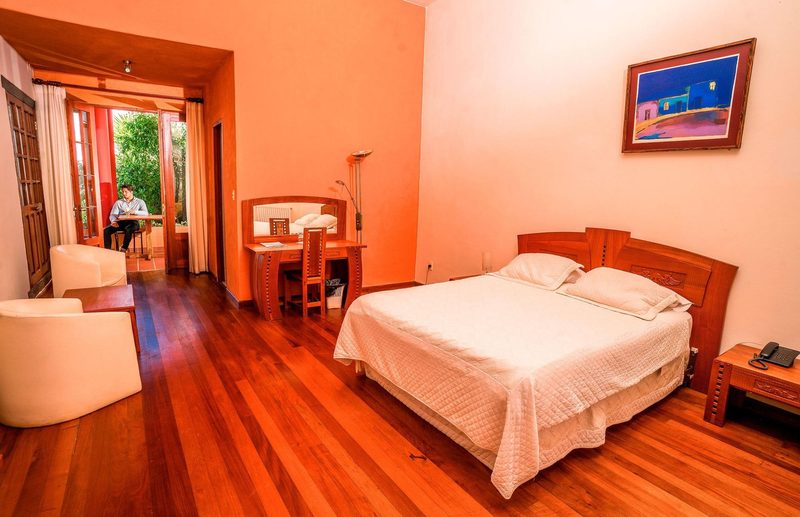
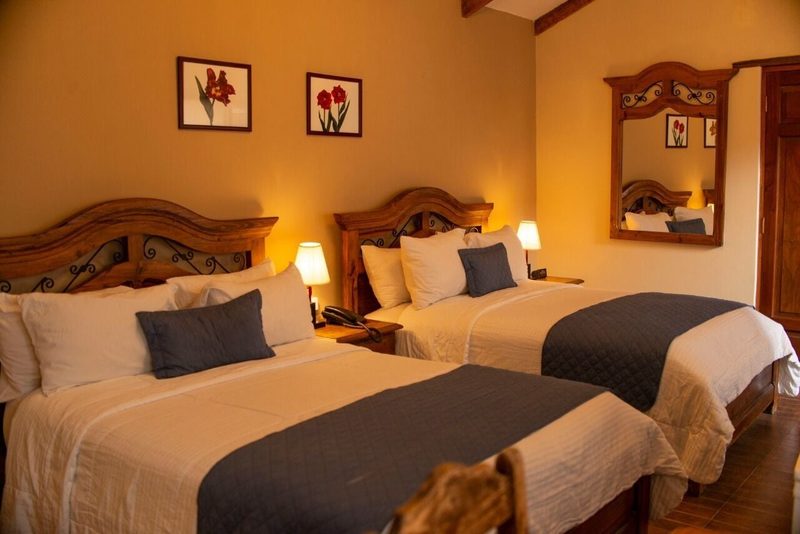
Where to Stay in Sucre in September
Hand-picked hotels across price tiers for September travellers.
Packing Checklist
Bookmark this page — your progress is saved between visits
Need the full list with shopping links?
Climate-specific gear, brand recommendations, and what to leave at home.
View Sucre Packing List →Essential Tips
Insider knowledge and common pitfalls to avoid
Insider Knowledge
Salteñas are strictly morning food in Sucre. The best vendors near Mercado Central sell out by 10 AM. They close for the day. Try after noon and you get blank stares. This is the single most common source of food-related tourist disappointment in the city.
Arriving from sea level? Route through La Paz or Potosi first. Spend a night there. Both sit higher than Sucre. A day of acclimatization at 3,600 m (11,800 ft) or above makes the drop to Sucre's 2,810 m (9,219 ft) feel like relief. Flying directly from Santa Cruz to Sucre without a buffer day is asking for trouble.
Mirador de la Recoleta shines at sunset. The whitewashed city below turns gold, then pink. Locals gather earlier. They share api morado, a thick purple corn drink spiced with cinnamon and clove. Poured from thermos bottles. It is one of the quieter, more honest windows into how Sucreños spend their evenings.
Sucre's chocolate tradition runs deep. Small shops cluster around Calle Audiencia. They sell handmade bars and drinking chocolate from Bolivian cacao grown in the Yungas lowlands. The gap between these and industrial chocolate recalibrates what you thought chocolate could be. September's cooler evenings make hot chocolate here feel exactly right.
Avoid These Mistakes
Do not treat altitude as a footnote. At 2,810 m (9,219 ft) your body processes oxygen roughly 25% less efficiently than at sea level. Scheduling a full day of walking on day one is a reliable recipe for headaches and nausea. Take day one slow. Drink water constantly. Save the Maragua trek for day two or three.
Do not pack for warm days or cold nights alone. The 15-degree Celsius swing between afternoon and after-dark catches travelers. Some bring only t-shirts. Others overpack winter gear and swelter by midday. Layers you can peel on and off are the only strategy that works here.
Do not attempt Uyuni Salt Flats as a day trip from Sucre. The distance is roughly 400 km (250 miles) across highland roads. One-day operators spend most of your daylight hours in a vehicle. Commit to at least two days. Or skip them from Sucre entirely. Visit from Uyuni town on a separate leg instead.
Short on time? See day trips around Sucre on GetYourGuide.
Ready to plan your trip to Sucre?
Now that you've got the research covered, here's where to go next.
Explore More Activities in Sucre
Didn't see anything interesting yet?
Browse Viator's full catalog of tours, day trips, food experiences, and private guides in Sucre.
See All Sucre Tours on Viator