Things to Do in Sucre in November
November weather, activities, events & insider tips
Low Season · Budget Friendly
November Weather in Sucre
Long-run averages for November
73°F (23°C)
High Temp
50°F (10°C)
Low Temp
2.6 inches (66 mm)
Rainfall
64%
Humidity
17
Sunny-Day UV
⚠ UV radiation is brutal at 2,810 meters (9,220 feet). The thin atmosphere filters little ultraviolet. Cool air hides the danger. Sunburn strikes in under 20 minutes without protection. Reapply high-SPF sunscreen constantly. The Uyuni Salt Flats double your exposure through reflection. Morning clarity deceives. Protect yourself.
⚠ November hail arrives fast and hits hard. Altitude intensifies the impact. Dark skies after midday mean move indoors. Do not wait. Hailstones here bruise exposed skin. Electronics left outside suffer damage. The storm gives minimal warning. Act quickly.
⚠ Altitude sickness hits most visitors from lower elevations. Treat it as medical reality. Symptoms include severe headache, nausea, insomnia, breathlessness. Rare cases progress to pulmonary or cerebral edema. These are life-threatening. Monitor symptoms for 48 hours. Worsening means immediate descent. Seek medical attention without delay. Do not gamble with this.
Making the most of November in Sucre? Browse tours and activities in Sucre on GetYourGuide.
Is November Right for You?
Weigh the advantages and considerations before booking
Advantages
- + Todos Santos on November 1 and 2 transforms Sucre into one of the most emotionally charged places in South America. Families construct elaborate altars stacked with sugar-cane arches, bread figures shaped like babies and ladders, coca leaves, and the favorite meals of the departed. The Cementerio General fills with the scent of marigolds and candle wax. The low hum of prayers mixes with brass bands playing mournful yaravies between the headstones. This is a window into Bolivian spiritual life that no museum exhibit can replicate. It happens right at the start of your November visit window.
- + The first November rains have begun painting the hills around Sucre a startling green after six months of brown and ochre austerity. At 2,810 meters (9,220 feet), the air takes on that wet-mineral smell of freshly dampened highland soil. The valleys toward Maragua and the Jalq'a weaving villages look their most photogenic. Afternoon clouds stack into enormous theatrical backdrops behind the whitewashed colonial skyline. The landscape feels alive in a way the dry-season postcard shots never capture.
- + November marks the opening of mirror-effect season on the Uyuni Salt Flats, reachable by multi-day tour from Sucre. The thin sheet of rainwater that begins pooling on the salt crust in late October creates the world's largest natural mirror. This is a surreal horizon-dissolving reflection of sky on white that exists only during the wet months. Early November tends to catch this phenomenon at its most pristine. Deeper December and January downpours make certain routes across the flats impassable for standard vehicles.
- + Tourist numbers are thin. Bolivia's gringo high season runs June through September when the skies are bone-dry. November sits in a quiet valley where you can walk into Sucre's cooking classes same-week. You will find the courtyards of Casa de la Libertad nearly empty. Eat at the Mercado Central without elbowing past tour groups. The city feels like what it is. This is a small, lived-in university town where the local students at San Francisco Xavier outnumber the travelers by a wide margin.
Considerations
- − Afternoon thunderstorms arrive with increasing regularity through November. Mornings tend to stay clear and warm. This is the kind of crystalline highland sunshine that makes you forget rain exists. By 2 or 3 PM heavy cumulonimbus clouds pile above the valley and drop sharp, cold downpours that can include hail at this altitude. Outdoor plans need to be front-loaded into the morning hours. Keep indoor alternatives ready for the second half of the day.
- − The altitude at 2,810 meters (9,220 feet) catches almost every first-time visitor off guard. Headaches, shortness of breath on staircases, disrupted sleep, and a strange lethargy are standard for the first 24 to 48 hours. If you are flying in from sea level, or even from Santa Cruz at roughly 400 meters (1,312 feet), you will feel it. This is not a minor inconvenience. Altitude is the single biggest variable in whether your first two days are enjoyable or spent in bed with a splitting head.
- − Unpaved roads to outlying attractions like the Maragua Crater and some of the more remote Jalq'a weaving communities turn slick and treacherous after heavy afternoon rains. Tour operators occasionally cancel or reroute day trips on saturated days. If your itinerary hinges on a specific outdoor excursion on a specific date, November introduces more weather-dependent uncertainty than the dry months of May through September would. Build in flexibility.
Settled on November? Compare hotel prices in Sucre for your dates on Trip.com.
Best Activities in November
Top things to do during your visit
November hits Sucre at a turning point. The bone-dry winter has ended. Afternoon showers now sweep the altiplano, softening the air and pulling the scent of damp clay and eucalyptus from the hillsides ringing the city. Daytime temperatures settle around 23 degrees Celsius. Warm enough that whitewashed colonial facades along Calle Nicolás Ortiz throw back a hard, almost Mediterranean glare. Nights drop to around 10 degrees. Cool enough to warrant a wool layer walking home from late dinner through quiet streets around Plaza 25 de Mayo. The rains average about 66 millimetres across November. They arrive as concentrated late-afternoon downpours, not all-day drizzle. Mornings stay clear and bright. The city's terra-cotta rooftops gleam after each storm. The surrounding countryside shifts from brown to green. The chalky soil of the Cordillera de los Frailes absorbs moisture and pushes out the first low scrub of the growing season. For the Salar de Uyuni, several hours southwest, November's early rains may begin depositing thin water across the salt crust. This produces the famous mirror effect. The phenomenon intensifies through December and into January and February when rainfall is heaviest. November is a threshold month. The salt flats transition from the dry, cracked-hexagon landscape of winter toward the reflective sheet of the deep wet season. Sucre feels unhurried in November. No high-season press of July and August. No holiday energy arriving in December. Markets around Mercado Central still overflow with chuño, dried llama meat, and first early-season corn. University students from the Universidad San Francisco Xavier crowd cafés along Calle Calvo in evenings. Low hum of conversation mixes with clatter of spoons against ceramic bowls of sopa de maní. For travelers, moderate rainfall and warm days make November one of the more comfortable months to explore Sucre's streets on foot, take day trips into surrounding valleys, or commit to the longer journey to the salt flats.

Uyuni Salt Flat 1 Day Tour +Sunset in the Salt Water Region with Mirror Effect
guided_experienceThe Uyuni Salt Flat one-day tour with sunset covers about 350 kilometres of terrain southwest of Sucre. It delivers you onto the largest salt flat on Earth in time to watch afternoon light shift from white-hot overhead glare to deepening amber stretching unbroken to the horizon. The tour routes through the town of Uyuni and out onto the Salar itself. The crunch of crystallized salt underfoot gives way, in wet patches, to glassy film of brine mirroring the sky so precisely the horizon line vanishes. At the salt water region, the late-day effect intensifies as the sun drops low. Clouds double themselves in the water beneath your feet. The silence is so total you can hear your own breathing echo off the emptiness.
Standing on a sheet of white extending past the curve of the Earth, watching the sky below you turn the same colours as the sky above, is a spatial experience no photograph fully conveys.
Insider tip: Bring dark sunglasses with UV protection rated for high altitude and a full water bottle. The salt flat sits at roughly 3,650 metres. The reflected glare is punishing by midday. There is no shade or water source for hours in any direction.
This month: November's early wet-season rains begin depositing shallow water on the Salar's surface, which can produce the mirror effect. The phenomenon is less consistent than in the peak rainy months of January and February, when heavier rainfall floods the flats more reliably.

Uyuni Salt flat 2 day+sunset at Salt Water Region + Mirror effect
otherThe two-day Uyuni Salt Flat tour builds on the single-day itinerary by adding an overnight stay near the Salar. You experience the salt flats under two entirely different skies. The first evening ends with the same sunset spectacle at the salt water region. The air cools fast as the light drops. Temperature plummets toward freezing on the open pan. The second morning brings something day-trippers miss: a pre-dawn departure onto the flats. The salt crust crackles under tires in the dark. The sky overhead is so dense with stars that the Milky Way throws a faint shadow on the white ground. The extra day also allows detours to Isla Incahuasi, where thousand-year-old cacti rise from a rocky island in the middle of the salt. Their spiny silhouettes stand sharp against the white expanse.
The overnight format lets you witness the Salar at its most extreme: the absolute silence of a night on the salt, the shock of a dawn where the horizon exists only as a colour gradient, and the unhurried second day of exploration that a single-day sprint cannot offer.
Insider tip: Pack thermal layers for the overnight portion. Temperatures on the Salar after dark can drop well below freezing, and the lodging is basic. A headlamp is useful for the pre-dawn departure.
This month: As with the one-day tour, November's transitional rainfall may begin to create the reflective water layer across the salt surface, though coverage depends on how much rain has fallen in the weeks prior.

Traditional Bolivian Cooking Class w/ Cocktail Making by La Boca del Sapo, Sucre
foodLa Boca del Sapo's cooking class in Sucre begins not at a stove but at the market. The instructor walks you through stalls heaped with ají amarillo peppers. Their bright orange skins release a sharp, almost floral heat when you split one open. You'll find sacks of dried quinoa, blocks of queso fresco, and bunches of huacataya. The Andean herb's pungent, anise-like smell is impossible to mistake for anything else. Back in the kitchen, you grind spices by hand in a batán, the stone mortar that predates the Inca. The rhythm of the pestle against rock becomes the soundtrack to the afternoon. The class finishes with cocktail preparation. The tang of singani, Bolivia's national grape spirit, cuts through citrus in a chuflay or a fresh-fruit sour.
This is one of the few structured opportunities in Sucre to cook Bolivian food under local guidance, from raw ingredient to finished plate, with the cocktail component adding a window into singani culture that most restaurants never explain.
Insider tip: Ask the instructor to show you how to judge the heat level of different ají varieties by colour and shape before you buy. The knowledge transfers directly to navigating Sucre's Mercado Central on your own afterward.

1 Day Trek in the Crater of Maragua and Inca Trails in Sucre
adventureThe day trek into the Crater of Maragua leaves Sucre behind and climbs into the Cordillera de los Frailes. The landscape opens into a vast natural amphitheatre of rust-red and cream-striped sedimentary rock, layered like the pages of a geological textbook sliced open. The trail descends into the crater floor, where a small indigenous community farms terraced plots. The air smells of woodsmoke and wet earth. Sections of the route follow remnants of Inca trails, stone-laid paths worn smooth by centuries of foot traffic. The rock walls along the way hold fossilized dinosaur footprints and ancient rock paintings. Their ochre pigments still cling to the sandstone.
Maragua concentrates geological drama, pre-Columbian history, and living indigenous agriculture into a single day's walk, all within a couple of hours of Sucre's colonial centre.
Insider tip: Wear sturdy hiking boots with ankle support. The descent into the crater involves loose scree sections, and the Inca trail segments, while spectacular, are uneven and slippery when damp.
This month: November's increasing rainfall can make the trail's steeper sections slippery and the creek crossings on the crater floor higher than in dry months. Confirm conditions with your guide on the morning of departure.

Historical and Cultural Walking Tour in Sucre with Guide
culturalThe historical and cultural walking tour of Sucre covers the concentrated colonial core on foot. You move through plazas and streets where the whitewash is so uniform it feels like walking inside a single continuous building. The route typically passes the Casa de la Libertad, where Bolivia's declaration of independence was signed. It threads through narrow streets where carved wooden balconies jut overhead, their dark timber framing sharp against the white walls. Your guide provides context that the architecture alone cannot: the layers of indigenous Charcas, Spanish colonial, and republican history compressed into a few square blocks, the reasons behind the whitewash mandate, and the local significance of churches whose baroque facades drip with carved stone fruit and angels.
Sucre's centre is one of the most architecturally coherent colonial ensembles in South America, and a guided walk turns what could be a pleasant stroll into a legible narrative of Bolivian history from pre-conquest to independence.
Insider tip: Wear comfortable walking shoes with good grip. Sucre's sidewalks are narrow and the cobblestone streets uneven, and the tour covers enough ground that blisters become a real concern in new or stiff footwear.

Uyuni Salt Flats Private 3 day tour (Palacio Sal 4* & Tayka 3*)
guided_experienceThe private three-day Uyuni Salt Flats tour with stays at the Palacio de Sal and Tayka hotels represents the most immersive way to experience the Salar and its surrounding altiplano from a Sucre base. The Palacio de Sal is constructed almost entirely from blocks of salt harvested from the Salar itself: the walls, the floors, even the bed frames are carved salt. The taste of it hangs faintly in the cool, dry air of the rooms. Over three days, the itinerary extends well beyond the salt flat's surface to take in the Eduardo Avaroa Reserve's surreal volcanic landscape. Flamingos stand in mineral-stained lagoons that shift from rust-red to emerald depending on the algae concentration. Geysers spit sulfurous steam into the thin, cold air at nearly 5,000 metres.
The private format and multi-day span allow access to terrain, wildlife, and altiplano solitude that shorter group tours cannot reach, including high-altitude lagoons and volcanic fields that feel remote.
Insider tip: Acclimatise to altitude before this trip. The itinerary crosses above 4,500 metres on the second and third days, and altitude sickness is common for travellers arriving directly from lower elevations. Spending at least two full days in Sucre, which sits at about 2,800 metres, before departure helps considerably.
This month: November marks the onset of the wet season across the altiplano. Early rains may begin creating the mirror effect on the Salar and fill the coloured lagoons to higher levels, potentially improving flamingo viewing. But some unpaved roads in the Eduardo Avaroa Reserve can become difficult when wet. The private format offers more flexibility to adjust routes around conditions.
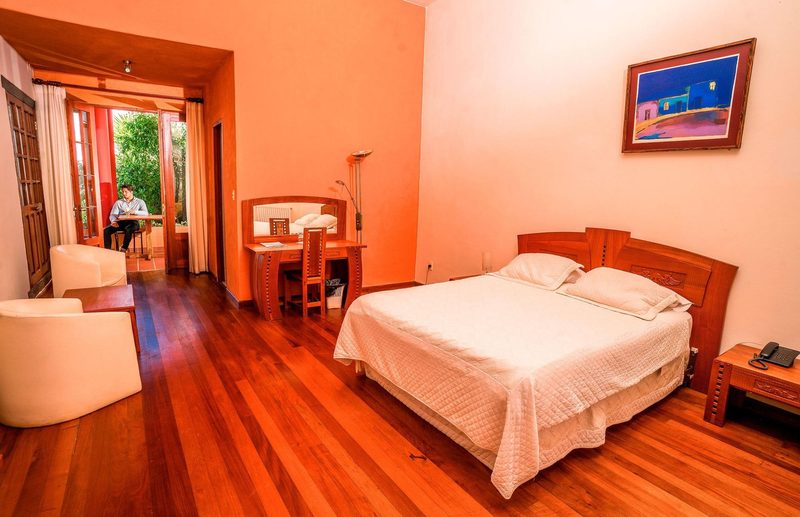
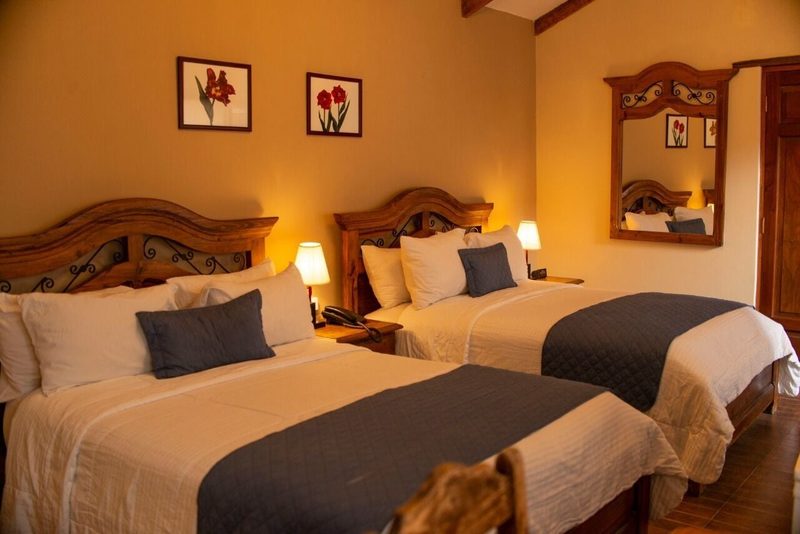
Where to Stay in Sucre in November
Hand-picked hotels across price tiers for November travellers.
Public Holidays in November
Dates that affect opening hours, transport and crowds
Todos Santos
Known in English as All Saints' Day. Observed nationwide as a public holiday.
Todos Santos
Known in English as All Saints' Day. Observed nationwide as a public holiday.
Todos Santos
Known in English as All Saints' Day. Observed nationwide as a public holiday.
Packing Checklist
Bookmark this page — your progress is saved between visits
Need the full list with shopping links?
Climate-specific gear, brand recommendations, and what to leave at home.
View Sucre Packing List →Essential Tips
Insider knowledge and common pitfalls to avoid
Insider Knowledge
Saltenias are a morning food in Sucre, and this catches nearly every visitor off guard. The shops that make them, look for the hand-lettered signs reading SALTENIAS on residential streets around Sucre's center, open by 9 AM and sell out by noon, sometimes earlier. If you sleep in and try to find one at 2 PM, you will be met with genuine confusion. The filling is a soupy, fragrant stew inside a sweet orange dough, and you eat it by biting a small hole in the top and slurping the broth before it runs down your arm. The first attempt is always messy. By the third morning, you will have a technique.
Mate de coca is not a drug experience, and treating it as one marks you instantly as a first-timer. In Sucre, coca tea is offered the way coffee is offered in other countries, in restaurants, at hotel reception, by new acquaintances. It tastes faintly like green tea with a vegetal, slightly bitter edge, and it takes a genuine edge off altitude symptoms. Drink it freely your first two days. The dried leaves sold in bags at the Mercado Central are also worth buying for chewing during treks, though the technique of forming a proper acullico in your cheek takes local instruction to get right.
The Mirador de la Recoleta, the hilltop viewpoint behind the Recoleta convent, is where most visitors go at midday and where almost none go at sunset. In November, when the afternoon rain clears by 5 or 6 PM, the western light turns Sucre's white buildings a warm amber and the wet rooftops catch the sun like scattered mirrors. The walk up is steep and the cobblestones can be damp. But the reward is a panorama of the entire colonial core with the green hills behind it that is categorically better than the flat midday version every guidebook photographs.
If Todos Santos falls during your visit, accept every invitation to visit a family's altar. Neighbors and strangers circulate between homes, praying briefly at each mesa for the departed, and the family reciprocates with food and drink. Refusing the offered plate is considered disrespectful to the dead, not just the living. You may eat more tantawawa bread and drink more chicha morada in one afternoon than you thought possible. Go with it. This is Sucre at its most generous and its most itself.
Avoid These Mistakes
Trying to do too much on the first day. The altitude at 2,810 meters (9,220 feet) is not a background detail. It is the defining physical fact of arriving in Sucre. Visitors who land from Santa Cruz or fly in via La Paz and immediately set off on a walking tour or cooking class spend the next 36 hours in bed with headaches. The experienced move is to plan your arrival day as a write-off: drink coca tea, walk slowly around the plaza, eat an early dinner, sleep long. Your second day in Sucre will feel like a different city.
Packing only for warm weather because the average high is 23 degrees C (73 degrees F). That number describes midday in direct sun, and it is misleading. Mornings start cool, the shade is always cold at altitude, and the moment an afternoon storm rolls in the temperature drops ten degrees in minutes. Travelers in shorts and sandals at 4 PM during a November hailstorm, shivering under a church doorway, are a daily sight. Bring the layers.
Assuming restaurants and shops operate on Northern Hemisphere meal schedules. Sucre eats lunch between noon and 2 PM, and this is the main meal. The almuerzo set lunch is the best-value, best-quality food in the city, served at comedores and restaurants citywide. Dinner is lighter and later, often after 8 PM. If you skip the almuerzo and try to find a full meal at 3 PM, you will find mostly closed kitchens and a long wait until evening.
Short on time? See day trips around Sucre on GetYourGuide.
Ready to plan your trip to Sucre?
Now that you've got the research covered, here's where to go next.
Explore More Activities in Sucre
Didn't see anything interesting yet?
Browse Viator's full catalog of tours, day trips, food experiences, and private guides in Sucre.
See All Sucre Tours on Viator