Things to Do in Sucre in April
April weather, activities, events & insider tips
Low Season · Budget Friendly
April Weather in Sucre
Long-run averages for April
70°F (21°C)
High Temp
47°F (8°C)
Low Temp
1.1 inches (28 mm)
Rainfall
72%
Humidity
12
Sunny-Day UV
⚠ Sucre sits at 2,810 m (9,219 ft) above sea level, high enough to cause altitude sickness in travelers arriving from lower elevations. Symptoms typically appear six to twelve hours after arrival and include headache, nausea, dizziness, and shortness of breath. Build in one to two acclimation days before any strenuous activity. Seek medical attention if symptoms worsen. Watch closely.
⚠ The peak UV index of 12 at this altitude means sunburn occurs significantly faster than at sea level, often within fifteen to twenty minutes of unprotected midday exposure. The cool air temperature in April is deceptive because you will not feel hot while your skin is burning. Apply and reapply SPF 50+ sunscreen now. Wear a hat and cover exposed skin during the midday hours. Stay safe.
⚠ The daily temperature swing of over 13°C (23°F) between afternoon highs and overnight lows catches unprepared travelers off guard. Hypothermia is not the risk. But real discomfort is, in accommodation without heating. Layer up aggressively after sunset. Bring warm socks. You will thank me.
Making the most of April in Sucre? Browse tours and activities in Sucre on GetYourGuide.
Is April Right for You?
Weigh the advantages and considerations before booking
Advantages
- + April flips the switch in Sucre. Rain plummets to 28 mm (1.1 inches), down from January's soaking 147 mm (5.8 inches). The afternoon deluges fade. Skies clear. That violet-blue overhead appears, the kind that only exists at 2,810 m (9,219 ft). Mornings arrive crisp and bright. By mid-morning, the colonial quarter becomes perfect walking territory.
- + Tourists thin out in April. The Plaza 25 de Mayo, packed with tour groups from June through August, now holds locals reading newspapers and students cutting between classes. Walk straight into the Casa de la Libertad. No queue. Linger at the Museo de Arte Indigena. No elbows. Grab lunch counter seats at the Mercado Central without the early arrival hustle.
- + The Sucre countryside peaks for photos in April. The Maragua Crater basin stays green from the last rains. Red sedimentary rock stacks against bright vegetation. That contrast vanishes by June. Trails firm up for solid footing. The landscape avoids the dusty brown of full dry season.
- + April delivers your last solid chance at the Salar de Uyuni mirror effect. Thin water still sheets parts of the salt crust. The sky reflects in an unbroken horizon. By May, evaporation wins. The salar turns dry white crust. April hits the sweet spot. Roads stay passable. Water remains.
Considerations
- − The wet-to-dry shift stays messy. April can still unload a sharp, cold afternoon shower with zero warning, early in the month. Short-lived but soaking. At altitude, rain plus wind crashes the felt temperature fast. You might score a week of blue skies. Or three soaked afternoons back to back.
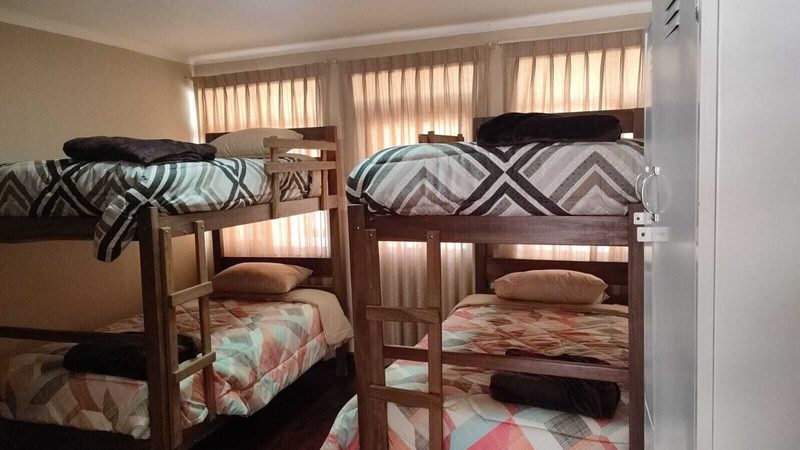
- − Nights hit 8°C (47°F). Many budget guesthouses and hostels skip central heating. You get blankets. Maybe two. Plus your own layers. The gap between 21°C (70°F) afternoons and midnight cold is brutal. Unprepared sleepers suffer.
- − April lands between seasons for operators. The June through August peak schedule hasn't started. Group departures thin out for Maragua Crater day trips, Tarabuco runs, and multi-day Uyuni expeditions. Expect to book private tours or wait for groups to fill. Tight itineraries feel the friction.
Settled on April? Compare hotel prices in Sucre for your dates on Trip.com.
Best Activities in April
Top things to do during your visit
April in Sucre arrives as a slow exhale after the wet season. Rainfall drops sharply from the soaking months of January and February, when storms dump nearly five inches a month onto the city's whitewashed colonial facades, down to barely an inch across the whole of April. The air at this altitude, just over 2,800 metres, carries a dry crispness in the mornings that cuts through layers, with lows around 47°F before dawn. By midday the sun warms the limestone walls of the historic centre to a comfortable 70°F. The quality of light over Sucre's famous white architecture becomes something photographers wait all year for: clean, raking, without the haze that humidity drags across the rooftops in February and March. The shift is palpable at street level. Market vendors along Calle Ravelo stack their tables with the last of the rainy-season produce. The smell of freshly fried salteñas, their pastry shells crackling with pockets of spiced broth, drifts from corner bakeries well before eight in the morning. The plazas fill differently in April. Without the afternoon downpours that scatter crowds from December through March, Sucre's residents linger in the shade of the jacaranda trees around Plaza 25 de Mayo through the long afternoon. They sip api morado from plastic cups while shoe-shiners work the wrought-iron benches. For travellers arriving in April, the city presents itself at its most walkable: warm but not punishing days, cool evenings that invite a second lap through the centro historico, and the kind of clear Andean sky that makes the terracotta rooflines glow copper at sunset. The drier weather also opens up the landscape beyond Sucre's city limits. Trails that turn to mud chutes in the wet months firm up. The vast salt flats of Uyuni, reachable by road to the southwest, still hold shallow pools of standing water from the recent rains. That residual water is precisely what creates the mirror effect across the salt crust, a phenomenon that peaks when a thin, still layer reflects the sky in an unbroken plane from horizon to horizon. April sits in the narrow window where the water remains but the storms have largely passed, making it one of the strongest months for that particular spectacle.

Uyuni Salt Flat 1 Day Tour +Sunset in the Salt Water Region with Mirror Effect
guided_experienceThe one-day Uyuni Salt Flat tour departs early and returns after sunset, compressing the full arc of the salar's moods into a single outing. You cross the bone-white hexagonal crust on foot and by vehicle, the salt crunching like packed snow under your boots, while the flat stretches so far in every direction that the horizon dissolves into a white shimmer. The tour routes through the salt-water region in late afternoon, where pools of shallow brine catch the dropping sun and flip the sky beneath your feet in the famous mirror effect, the reflected clouds so crisp you lose your sense of which way is up.
The mirror effect at sunset, when the salt flat becomes an unbroken sheet of reflected sky, is one of the most disorienting and beautiful optical phenomena on Earth.
Insider tip: Bring dark-soled shoes you do not mind ruining. The salt and brine eat through fabric quickly, and white-soled trainers make it impossible to create clean perspective-trick photographs against the white ground.
This month: April's residual standing water from the recently ended wet season is what produces the mirror effect across the salt crust. As the dry season deepens into May and June, the water evaporates and the reflective pools disappear.

Uyuni Salt flat 2 day+sunset at Salt Water Region + Mirror effect
otherThe two-day Uyuni Salt Flat itinerary adds what the single-day version cannot: a night on the altiplano, where the absence of light pollution turns the sky into something that feels closer to a planetarium projection than anything natural. After the first day's sunset session at the salt-water pools, you sleep near the flats and wake before dawn to watch the mirror surface in absolute stillness, before any wind stirs the brine. The second day pushes deeper into the surrounding landscape, past islands of ancient coral studded with towering cacti, the air thin and dry and tasting faintly of mineral dust.
Spending a night beside the salar transforms the experience from a spectacle into an immersion, with the pre-dawn mirror and the Milky Way arcing overhead in absolute silence.
Insider tip: Temperatures on the altiplano drop well below freezing after dark, even in April. Pack a proper thermal layer and a wool hat for the night, regardless of how warm Sucre felt when you left.
This month: The shallow standing water that creates the mirror effect is still present in April from the tail of the wet season. By late May, most of the reflective pools have dried, and the salar presents as a solid white crust instead.

Traditional Bolivian Cooking Class w/ Cocktail Making by La Boca del Sapo, Sucre
foodLa Boca del Sapo's cooking class in Sucre does not hand you a laminated recipe card and point you toward a pre-measured mise en place. You start at the mercado, choosing ajíes by colour and heft, squeezing limes, smelling bunches of quilquiña, the pungent herb that underpins Bolivian salsas and smells like a cross between cilantro and wet earth. Back in the kitchen, the work is hands-on and unhurried: you fold salteñas by hand, the dough sticky and yielding, and learn the particular wrist-flick that crimps the seam into the signature rope pattern. The session finishes with cocktail-making, including a singani-based drink that tastes bright and herbaceous, the grape spirit sharp enough to cut through the richness of the meal you have just built.
This is the most direct way to understand Sucre's food culture from the inside, working with the same ingredients and techniques that stock the city's market stalls and home kitchens.
Insider tip: Ask specifically about the ají de maní, a peanut-based sauce that appears on nearly every Sucre table but rarely on tourist menus. The instructors at La Boca del Sapo will teach it if you request it, and it is the single most useful recipe to take home.

1 Day Trek in the Crater of Maragua and Inca Trails in Sucre
adventureThe day trek to the Crater of Maragua follows ancient Inca trail segments carved into the hillside above Sucre, switchbacking through terrain that looks like it belongs on another planet. The crater itself is not volcanic but a geological syncline, a vast bowl of layered red and ochre sedimentary rock folded and eroded into fins, ridges and amphitheatres. You walk along the rim and then descend into the basin, where the silence is total except for wind scraping across exposed sandstone and the occasional distant bleating of goats from a Jalq'a community settlement below. The rock face holds dinosaur footprints, pressed into the stone in neat trackways, and the stratified cliff bands shift from rust to cream to deep purple depending on the angle of the sun.
The Maragua crater concentrates geological drama, indigenous Jalq'a culture and Inca road engineering into a single day's walk that feels remote despite being reachable from Sucre.
Insider tip: Wear boots with ankle support, not trail runners. The descent into the crater crosses loose scree and narrow paths cut into clay that can still be slick from residual moisture in April. Trekking poles help significantly on the steeper sections.
This month: Trails in the Maragua area are firming up in April as the wet season ends. But isolated muddy stretches persist on north-facing slopes that dry last. The reduced rainfall compared to January through March makes April significantly more practical for this trek than the peak wet months.

Historical and Cultural Walking Tour in Sucre with Guide
culturalSucre's historic centre is dense enough that a guided walking tour covers ground you would otherwise walk past without understanding. The route threads through the colonial grid around Plaza 25 de Mayo, past the ornate facade of the Casa de la Libertad where Bolivia's declaration of independence was signed, through narrow streets where the whitewashed walls radiate stored heat and the sound of your footsteps echoes off stone corridors. A knowledgeable guide unpacks the layers: why Sucre was the constitutional capital and La Paz the administrative one, how the silver wealth of Potosí built these churches and mansions, and what the indigenous weavings sold in the market doorways depict. The pace is unhurried, with stops at churches where the smell of old incense hangs in cool naves and the gilded altarpieces catch whatever light filters through high windows.
Sucre's colonial centre is a UNESCO World Heritage site, and a guided walk is the fastest way to decode the political, architectural and cultural history packed into its tight grid of white streets.
Insider tip: Ask your guide to include the rooftop terrace of the Convento de San Felipe Neri. It is not always on the standard route. But the view from the bell tower across Sucre's white roofscape to the surrounding hills is the single best panorama in the city.

Uyuni Salt Flats Private 3 day tour (Palacio Sal 4* & Tayka 3*)
guided_experienceThe private three-day Uyuni Salt Flats tour occupies a different category entirely. You sleep at the Palacio de Sal, a hotel built from blocks of salt harvested from the salar itself, where the walls, floors, and furniture are all carved salt and the air inside carries a faint dry mineral tang. The second night shifts to a Tayka hotel at higher altitude, surrounded by volcanic desert landscape. Three days allows the itinerary to reach the Eduardo Avaroa reserve on the Chilean border, where you stand at the edge of the Laguna Colorada watching flamingos wade through water stained blood-red by algae, the sulphurous steam from nearby geothermal vents drifting across the shore. The private vehicle means stops are yours to dictate, and the pace allows for the kind of lingering that group tours cannot afford: twenty minutes watching light change across the Arbol de Piedra, an hour at the train cemetery outside Uyuni where rusted locomotives sink into the salt crust.
This is the most complete and comfortable way to experience the full sweep of Bolivia's altiplano, from the mirror flats to flamingo lakes to volcanic desert, with accommodation that is itself part of the spectacle.
Insider tip: Request that your driver stop at the salt-flat pools both at sunset on the first day and at dawn on the second. The mirror effect in pre-dawn stillness, before any vehicle tracks disturb the water surface, produces the cleanest reflections, and most group tours miss it entirely because they depart too late.
This month: April has a strong combination for this route: the mirror-effect pools on the salar still hold water from the wet season, while the tracks and roads across the altiplano to the Eduardo Avaroa reserve have dried enough to be reliably passable. In the peak wet months of January and February, flooding can close the southern route entirely.
Where to Stay in Sucre in April
Hand-picked hotels across price tiers for April travellers.
Public Holidays in April
Dates that affect opening hours, transport and crowds
Viernes Santo
Known in English as Good Friday. Observed nationwide as a public holiday.
Packing Checklist
Bookmark this page — your progress is saved between visits
Need the full list with shopping links?
Climate-specific gear, brand recommendations, and what to leave at home.
View Sucre Packing List →Essential Tips
Insider knowledge and common pitfalls to avoid
Insider Knowledge
Saltenas dominate the morning scene in Sucre. Vendors pull them from ovens at 7 AM. By noon every single tray sits empty. These baked pastries contain a sweet-spiced meat stew that remains liquid inside a sealed crust. You must bite a tiny hole in the top first. Sip the hot broth completely. Finish the rest afterward. Locals argue that Sucre saltenas beat those from La Paz. This rivalry proves true. Stand near the Mercado Central or along Calle Ravelo to join the longest queues. The dough tastes subtly sweet. The filling delivers juicy pepper notes. Eat standing up. Hold a napkin ready. Taste the tradition.
The Tarabuco Sunday market justifies the 64 km (40 mile) drive from Sucre. Leave early. Yampara and Jalq'a vendors arrange their handwoven textiles by 7 AM. Each community crafts distinct designs that operate as a visual language. The weaving quality stands out. Locals spend months finishing each piece on backstrap looms. Tourist buses arrive later. The vibe changes from a working market to a stage show. Ninety minutes of winding mountain roads lead here. Villages cling to terraced hillsides. Watch carefully. Stay focused. Stay alert.
The upper floor of Sucre's Mercado Central delivers unmatched lunch value. You must climb the stairs to reach it. Countless office workers, students, and taxi drivers pack this level. They eat quickly and vanish. A complete almuerzo features soup, rice with meat and potato, fresh juice, and fruit. The soup demands your attention. Peanut-based sopa de mani or potato-heavy chuno soup steams in a thick bowl. Both dishes restore your warmth after a chilly morning. Point at your favorite option. The vendors will direct you smoothly. Eat steadily. Enjoy the meal. Dine smart.
Flying into Sucre from sea level requires strict pacing. Skip all exercise on your first full day. The 2,810 m (9,219 ft) elevation affects everyone uniquely. Most visitors feel normal initially. A dull headache follows by evening. Morning brings mild nausea and fatigue. Sip water consistently. Eat small portions. Drink coca tea daily. Walk only the flat colonial streets. Avoid La Recoleta climbs. Cancel the Maragua trek temporarily. Day two brings natural adjustment. Moderate exercise feels safe now. Schedule heavy treks for day three onward. This timing separates enjoyment from misery. Rest properly. Move slowly. Pace yourself.
Avoid These Mistakes
Do not underestimate the altitude here. Sucre feels gentle due to green spaces and walkable streets. Travelers often ignore acclimation rules. They jump straight into mountain treks or the Uyuni expedition at 3,656 m (11,995 ft). Headaches and nausea quickly follow. Exhaustion transforms spectacular scenery into a brutal test. Arriving from sea level demands patience. Reserve one or two rest days in Sucre before heavy exercise. Breathe deep. Heal fast. Rest deep.
Pack for the 21°C (70°F) heat but expect the 8°C (47°F) cold. Sunset triggers rapid altitude temperature drops. Visitors wearing shorts and thin layers quickly regret it. They purchase expensive alpaca sweaters at plaza tourist shops. That outcome suits some travelers. Your own fleece weighs less, compresses easily, and blocks wind effectively. Stay prepared. Dress right. Layer up.
Skip the rushed Salar de Uyuni day trip from Sucre. Mountain bus routes demand six to seven hours each way. A single-day return guarantees exhaustion and car sickness. You will claim just three hours on the salt flats. Fly directly to Uyuni instead. Book a proper one-day tour from that base. Commit to a multi-day overland expedition instead. Treat the travel itself as part of the adventure. The terrain between Sucre and the salar delivers raw power. You cannot appreciate them from a tired bus at hour eleven. Plan ahead. Travel smart. Book ahead.
Short on time? See day trips around Sucre on GetYourGuide.
Ready to plan your trip to Sucre?
Now that you've got the research covered, here's where to go next.
Explore More Activities in Sucre
Didn't see anything interesting yet?
Browse Viator's full catalog of tours, day trips, food experiences, and private guides in Sucre.
See All Sucre Tours on Viator