Things to Do in Sucre in July
July weather, activities, events & insider tips
Low Season · Budget Friendly
July Weather in Sucre
Long-run averages for July
69°F (20°C)
High Temp
39°F (4°C)
Low Temp
0.1 inches (3 mm)
Rainfall
54%
Humidity
8
Sunny-Day UV
⚠ High-altitude UV radiation is intense despite cool air temperatures. At 2,810 m (9,220 ft), UV levels are significantly stronger than at sea level, and the dry air and clear July skies offer no atmospheric buffer. Sunburn and sun damage occur rapidly even on overcast mornings. Apply high-SPF sunscreen to all exposed skin including the backs of hands and ears, and reapply frequently. Protect your skin.
⚠ Near-freezing overnight temperatures catch many travellers unprepared. The 16°C (29°F) swing between afternoon highs and pre-dawn lows is one of the largest daily temperature ranges you will encounter in any South American city, and most Sucre accommodations lack central heating. Hypothermia is unlikely but uncomfortable cold nights are common for unprepared visitors. Pack warm clothes.
⚠ Altitude sickness affects the majority of visitors arriving from lower elevations. At 2,810 m (9,220 ft) Sucre is high enough to cause headaches, nausea, insomnia, and breathlessness in otherwise healthy people. Symptoms typically peak 12 to 24 hours after arrival. Avoid alcohol on the first day, stay hydrated, and do not plan strenuous activity for your first 48 hours. Take it slow.
Making the most of July in Sucre? Browse tours and activities in Sucre on GetYourGuide.
Is July Right for You?
Weigh the advantages and considerations before booking
Advantages
- + July brings Sucre's driest weather. Barely 3 mm (0.1 inches) falls all month. Walk the colonial streets. Hike the Maragua Crater. Sit on La Recoleta steps and watch the rooftops turn gold at sunset. You will never reach for a rain jacket. The sky stays deep blue from sunrise past midday. At this altitude, the light makes the whitewashed centro historico facades practically glow.
- + Daytime temperatures sit around 20°C (69°F). This is likely Bolivia's most comfortable walking weather. The air is cool enough for hours on foot through the colonial grid. You will not soak in sweat like in the lowlands. It is warm enough that a light layer over a t-shirt handles most afternoons. Sucre's compact scale helps. The major landmarks, markets, and best food all sit within a 20-minute walk of the Plaza 25 de Mayo.
- + July falls in Sucre's dry season. It sits outside the Southern Hemisphere summer holiday rush. The city is noticeably quieter than December through February. Accommodation availability tends to be strong. You will not fight for a table at restaurants surrounding the plaza. The lack of crowds matters at the Museo de Arte Indigena ASUR. This museum holds some of the finest indigenous textile work in the Americas. It is often nearly empty. You get time to stand in front of the Jalq'a and Tarabuco weavings. You can absorb what you are looking at.
- + The bone-dry air and minimal light pollution make July prime for stargazing excursions from Sucre. Clear skies are the norm. The Southern Hemisphere winter constellations sit vividly overhead. The Magellanic Clouds appear once full dark hits around 6:30 PM. Several operators run evening trips to elevated viewpoints outside the city. The Milky Way cuts the sky like a chalk line.
Considerations
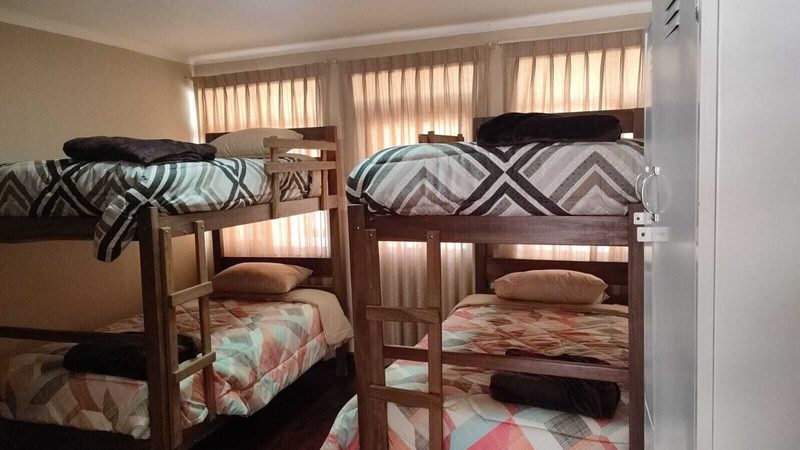
- − Nighttime temperatures drop to around 4°C (39°F). They can dip below freezing in exposed areas outside the city. Most budget and mid-range guesthouses in Sucre lack central heating. Some older colonial buildings retain cold like a stone cellar does. You will sleep in layers. That first step onto a tile floor at 6 AM is bracing. Bring a proper warm sleeping base layer. Expect to pile on every blanket in the room.
- − The dry air at 2,810 m (9,220 ft) compounds typical altitude effects. Headaches happen. Shortness of breath on stairs happens. Disrupted sleep happens for the first 24 to 48 hours. The low humidity, around 54%, dries out lips, nasal passages, and skin faster than most travelers expect. Drinking water obsessively is not a suggestion. Taking the first day very slow is not a suggestion. Both are necessities. This is true if you have flown in from sea level.
- − July's short days mean sunset around 5:45 PM. Full dark arrives quickly. Afternoon outdoor activities need to wrap up earlier than you might plan. The rapid temperature drop once the sun goes behind the hills can catch you underdressed. You might be comfortable in a t-shirt at 2 PM. Plan your hiking and outdoor excursions for morning hours. The light is best then. The air is warmest then.
Settled on July? Compare hotel prices in Sucre for your dates on Trip.com.
Best Activities in July
Top things to do during your visit
Sucre in July sits at the heart of Bolivia's dry season, and the difference is immediate. Step off a bus or out of a taxi onto the white-washed colonial streets and the air hits you, thin, cool, and startlingly clear at 2,800 metres. Mornings in Sucre begin cold, near 4°C before dawn, the kind of chill that settles into your knuckles and makes the first cup of api, a thick, cinnamon-laced corn drink sold from steaming pots on Calle Junín, feel essential rather than optional. By midday the sun climbs to a comfortable 20°C, warm enough to sit in Plaza 25 de Mayo with your jacket folded beside you, watching shoeshine boys in balaclavas work the benches while pensioners feed pigeons under the jacaranda canopy. Rain is almost nonexistent, an average of just 3 mm for the entire month, meaning weeks can pass under an unbroken blue sky arching over the terracotta roofline. The low humidity keeps the whitewashed facades of the historic centre looking almost luminous, their lime-and-chalk surfaces reflecting the Andean sun with an intensity that makes sunglasses non-negotiable. This is Sucre at its most unhurried. The wet-season mud that chokes rural roads from December through March is long gone, and the trails around the city, toward Maragua and the dinosaur tracks at Cal Orcko, are dry and firm underfoot. Restaurants along Calle Nicolás Ortiz and in the lanes near Mercado Central serve comida del almuerzo at noon, and because Sucre draws fewer international visitors during Bolivia's winter months, you will often find yourself the only foreigner in a room full of sucrenses eating mondongo or fritanga, the smell of cumin and ají panca drifting from the kitchen. Evenings cool quickly once the sun drops behind Cerro Churuquella, and by eight o'clock the temperature has fallen enough that locals pull on wool ponchos and cluster around salteñera stands for the last batches of the day, the pastry shells cracking under your teeth to release a scalding, slightly sweet broth of meat and potato. The rhythm of July in Sucre is slow, bright, and bone-dry, a city at ease with its own stillness. For those wondering whether Sucre is worth visiting, the answer is architectural as much as atmospheric. Bolivia's constitutional capital holds one of the most intact colonial cores in South America, its churches and convents dating to the 1500s and 1600s, all of it rendered in that signature chalky white that earned the city its nickname, 'La Ciudad Blanca'. July's cloudless skies and mild afternoons make walking its grid of narrow streets a physical pleasure rather than a sweaty ordeal, and the surrounding countryside, Quechua farming communities, Cretaceous-era fossil beds, the bizarre eroded landscape of the Maragua crater, is accessible on day trips that rarely require anything more than a sturdy pair of shoes and a bottle of water.

Uyuni Salt Flat 1 Day Tour +Sunset in the Salt Water Region with Mirror Effect
guided_experienceThe one-day Uyuni Salt Flat tour with sunset at the salt-water region has a compressed but spectacular way to witness the Salar de Uyuni, the largest salt flat on earth. Your vehicle drives out across a white crust that extends to the horizon in every direction, the silence so total you can hear the crystalline surface crunch beneath the tyres, and in July the thin film of brine that pools in certain low-lying areas can still produce the mirror effect, that disorienting illusion where the sky and ground merge into a single plane of reflected blue and pink as the sun drops. The cold, dry winter air sharpens visibility to an almost surreal degree, so the distant volcanoes along the Chilean border appear etched against the sky rather than lost in haze.
Nowhere else on earth can you stand on a blindingly white plain that stretches beyond the curve of the horizon and watch the sunset dissolve the boundary between ground and sky.
Insider tip: Bring a warm hat and thermal layer for sunset, temperatures on the salt flat plummet once the sun disappears, dropping well below freezing after dark, and the wind across that open expanse has nothing to slow it down.
This month: July's dry conditions mean the salt crust is firm and fully traversable. But the shallow brine pools needed for the mirror effect are less extensive than in the shoulder months of April or November, ask your operator which specific zone they will use for the reflection shots.

Uyuni Salt flat 2 day+sunset at Salt Water Region + Mirror effect
otherThe two-day Uyuni Salt Flat itinerary extends the experience into an overnight stay on or near the Salar, and that second day transforms the trip from a photo excursion into something more immersive. After watching the sunset mirror effect on day one, you sleep at a salt hotel or community lodge on the altiplano, the walls built from cut salt blocks that taste faintly mineral if you run your tongue along them, and wake before dawn to watch the salt flat emerge from darkness under a sky still dense with stars. The silence at 3,600 metres in the predawn cold is almost physical, pressing against your eardrums, broken only by the creak of cooling metal from the parked 4x4. Day two typically adds the coloured lagoons and geothermal vents south of the Salar, where flamingoes stand knee-deep in water tinted rust-red by algae and the smell of sulphur rises from fumaroles in the rocky ground.
The overnight stay lets you experience both the Salar's sunset mirror and its predawn stillness, two entirely different landscapes separated by a few hours of sleep at high altitude.
Insider tip: Pack a headlamp with red-light mode for the predawn walk, white light ruins your night vision and floods out the stars, which at this altitude and in July's dry air include the Magellanic Clouds clearly visible to the naked eye.
This month: July's near-zero rainfall means the unpaved roads south of the Salar are in their best condition of the year, and the altiplano air is dry enough that nighttime stargazing from the salt flat is exceptionally clear.

Traditional Bolivian Cooking Class w/ Cocktail Making by La Boca del Sapo, Sucre
foodLa Boca del Sapo's cooking class in Sucre puts you behind the stove in a home kitchen rather than a restaurant showpiece, and the difference is immediate, you are elbow-deep in peeling potatoes and toasting cumin seeds alongside a Sucre-born cook who learned these recipes from her grandmother, not from a culinary institute. The class begins at the Mercado Central, where you walk through stalls heaped with dried llajwa peppers, mounds of chuño, freeze-dried potato that smells faintly earthy and looks like small grey stones, and fresh queso criollo, selecting ingredients while the cook explains what to look for and what to avoid. Back in the kitchen, the scent of frying garlic and ají amarillo fills the room as you prepare traditional dishes, salteñas with their sweet, soupy filling sealed inside a crimped pastry crust, or pique macho, a heap of chopped beef, sausage, and potatoes doused in tomato and locoto pepper. The session finishes with Bolivian cocktails, and by the end your fingertips smell like lime and singani.
This is the most direct route into Sucre's home cooking tradition, you learn to make the dishes sucrenses eat, in a kitchen that feels like someone's house because it is.
Insider tip: Wear clothes you do not mind staining, the ají amarillo paste leaves a persistent orange-yellow mark on cotton, and the cooking is hands-on enough that splatter is inevitable.

1 Day Trek in the Crater of Maragua and Inca Trails in Sucre
adventureThe day trek to the Crater of Maragua follows Inca-era trail segments out of Sucre's urban fringe and into a landscape that looks more like the American Southwest than the Andes, eroded red-and-ochre rock formations rising from a circular depression that is, technically, an ancient volcanic crater, though long since collapsed and filled with Quechua farming settlements. The trail descends along switchbacks where you can run your hand along exposed strata, layers of sandstone, shale, and limestone compressed and tilted by millions of years of tectonic force, their edges sharp and flaking. Inside the crater, the silence is enormous. Scattered adobe farmhouses sit among fields of maize and potato, roosters call across the valley, and the smell of woodsmoke from cooking fires hangs in the still, dry July air. Your guide points out dinosaur footprints embedded in the tilted rock, genuine Cretaceous trace fossils, not replicas, and the surreal rock formations locals call the Devil's Doorway and the Cathedral.
Maragua puts you inside a geological anomaly that most travellers to Bolivia never hear about, a collapsed crater laced with Inca trails and dinosaur tracks, all within a day's walk of Sucre.
Insider tip: Start early enough to be inside the crater by late morning. The sun is strong at altitude but the crater walls cast long shadows by mid-afternoon, and the trail back up is easier in warmth than in the sharp cold that descends after three o'clock.
This month: July's dry, firm trails make this one of the best months for the trek, the muddy, slippery switchbacks that plague the route during the December-to-March rains are absent, and the creek crossings in the crater floor are low or dry.

Historical and Cultural Walking Tour in Sucre with Guide
culturalThe historical and cultural walking tour of Sucre covers the colonial core on foot with a local guide, and at this altitude, nearly 2,800 metres, the slow pace is welcome. You move through Plaza 25 de Mayo, where the Metropolitan Cathedral's white bell towers rise against the blue winter sky, past the Casa de la Libertad where Bolivia's declaration of independence was signed in 1825, and along narrow streets where balconied mansions in white stucco and dark timber overhang the cobblestones. The guide contextualises what you are seeing, not just dates and names. But the economic machinery of colonial silver extraction from Potosí that funded these churches and convents, and the indigenous Quechua and Aymara labour that built them stone by stone. You hear the echo of your own footsteps on the cobbles in the quieter streets behind San Felipe Neri, where the monastery's rooftop terrace has a panoramic view of white roofs cascading down the hillside, the terracotta tiles warm under your palms in the midday sun.
Sucre's colonial architecture is best understood with someone who can explain the human cost and political drama behind those immaculate white walls, this tour provides that context at walking speed.
Insider tip: Ask your guide to include the Textile Museum (Museo de Arte Indígena), which sits slightly off the standard route but holds some of the finest examples of Jalq'a and Tarabuco weaving in Bolivia, the dark, almost hallucinatory Jalq'a patterns of interlocking animals are unlike any textile tradition you will see elsewhere.

Uyuni Salt Flats Private 3 day tour (Palacio Sal 4* & Tayka 3*)
guided_experienceThe private three-day Uyuni Salt Flats tour with accommodation at the Palacio de Sal and Tayka hotels is the most comfortable way to experience the Salar and the Eduardo Avaroa Reserve without sharing a Land Cruiser with strangers. The Palacio de Sal is built almost entirely from salt blocks, walls, furniture, even the bed platforms, and sleeping there is an oddly tactile experience, the air cool and faintly saline, the surfaces gritty under your fingertips. On day two, the route pushes south into the altiplano desert toward the Laguna Colorada, where the shallow, mineral-rich water turns a deep blood-red from algae and the wind carries a faint, sulphurous tang from the Sol de Mañana geysers nearby. The Tayka hotels, simple but warm stone-and-thatch lodges run by local communities, offer hot showers and thick wool blankets, a luxury that matters when the outside temperature drops below minus ten at night. By day three, you have crossed terrain that shifts from blinding white salt to rusty desert to turquoise lagoons fringed with borax deposits that crunch like frost underfoot.
Three days and two nights give you the full altiplano traverse, salt flat, coloured lagoons, geysers, and flamingo colonies, at a pace that lets you absorb it rather than endure it.
Insider tip: Bring your own supply of coca leaves or coca tea bags for the high-altitude stretches above 4,500 metres, the Tayka lodges stock mate de coca but supply can run thin when multiple groups arrive the same night, and altitude symptoms hit hardest during the second night.
This month: July's cold nights on the altiplano are the trade-off for the driest roads and clearest skies of the year, expect temperatures well below freezing after dark at the Tayka lodges, and confirm that your vehicle carries adequate blankets and a working heater.
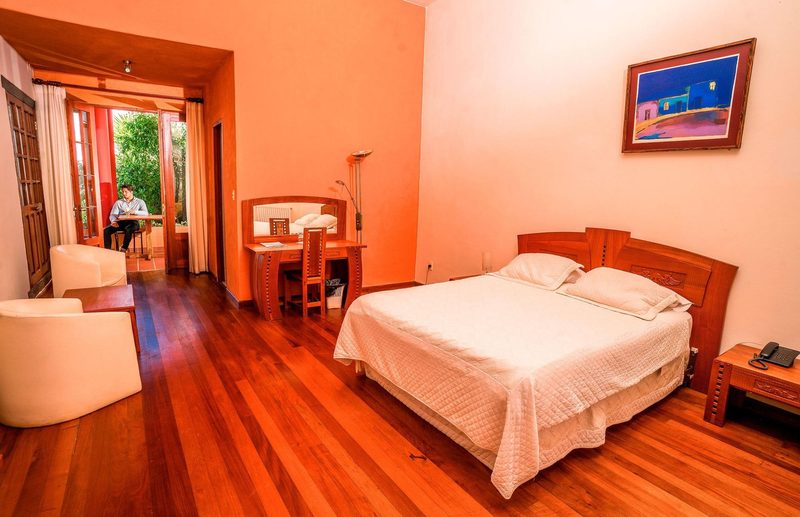
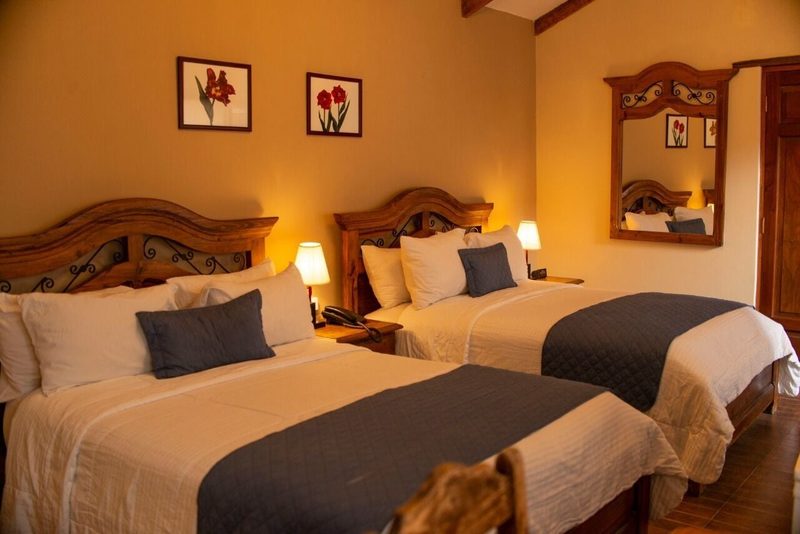
Where to Stay in Sucre in July
Hand-picked hotels across price tiers for July travellers.
Packing Checklist
Bookmark this page — your progress is saved between visits
Need the full list with shopping links?
Climate-specific gear, brand recommendations, and what to leave at home.
View Sucre Packing List →Essential Tips
Insider knowledge and common pitfalls to avoid
Insider Knowledge
Eat saltenas before 10 AM. These crimson pastries hold sweet, brothy meat stew. They are Sucre's morning staple. Best stalls sell out by mid-morning. Bite the top. Sip the broth. Then eat the shell. Get it wrong, you wear the broth. This is also tradition. Stalls near Mercado Central and Calle Ravelo turn over fastest. Freshest product.
Sucre, not La Paz, is Bolivia's constitutional capital. The Supreme Court sits here. Sucrenses mention this with pride that borders on ferocity. Calling La Paz the capital is technically accurate in practice. Emotionally, it is wrong. You will hear about it.
Museo de Arte Indigena ASUR sits near the plaza in a colonial building. Its Jalq'a and Tarabuco textiles rival any European ethnographic collection. The Jalq'a weavings, dense black and dark red, surreal animal figures that seem to move, are extraordinary. Take your time. Most visitors spend twenty minutes. That is like twenty minutes in the Prado.
Sucre's chocolate workshops deserve more attention. Bolivia's Chapare region grows exceptional cacao. Several small-batch chocolatiers here run tastings and workshops. You grind roasted nibs on a stone metate. You taste Bolivian criollo against commodity cacao. Freshly ground cacao bites back, sharp and almost floral. Nothing like processed chocolate. July's cool temperatures help. The chocolate stays solid long enough to taste.
Avoid These Mistakes
Arriving from sea level and trying to do everything on day one is unwise. Sucre sits at 2,810 m (9,220 ft), and altitude sickness does not care how fit you are. The headache, the breathlessness walking uphill, the disrupted sleep: these hit most people within six to twelve hours of arrival. Take it slow. The smart move is to spend your first day walking slowly through the centro historico, drinking water constantly, eating lightly, and resisting the urge to book a dawn trek to Maragua for the following morning. Rest up. Give yourself 48 hours to acclimatise before anything strenuous.
Packing for the daytime temperature and ignoring the nights is a common error. At 20°C (69°F) in the afternoon sun, Sucre feels like a mild spring day, and it is tempting to pack accordingly. Then the sun sets. Within an hour the temperature has dropped 15 degrees. Travellers in hostels with thin blankets and no heating spend miserable nights shivering and wondering why they left their warm jacket at home. July nights in Sucre are bitterly cold, not refreshingly cool, cold. Pack layers.
Skipping Sucre entirely in favour of La Paz or rushing through to reach Uyuni is a serious mistake. Sucre is not a transit stop. It is a city worth three to four full days on its own, with the best-preserved colonial architecture in Bolivia, a food culture that rewards exploration, and a pace of life that La Paz's chaotic altitude-amplified intensity cannot match. Stay longer. Travellers who treat Sucre as a bus station between Potosi and Uyuni consistently report it as their biggest regret in Bolivia. Do not rush.
Short on time? See day trips around Sucre on GetYourGuide.
Ready to plan your trip to Sucre?
Now that you've got the research covered, here's where to go next.
Explore More Activities in Sucre
Didn't see anything interesting yet?
Browse Viator's full catalog of tours, day trips, food experiences, and private guides in Sucre.
See All Sucre Tours on Viator