Things to Do in Sucre in June
June weather, activities, events & insider tips
Low Season · Budget Friendly
June Weather in Sucre
Long-run averages for June
69°F (21°C)
High Temp
40°F (4°C)
Low Temp
0.1 inches (3 mm)
Rainfall
46%
Humidity
8
Sunny-Day UV
⚠ Nighttime temperatures hover around 4°C (40°F). Outside the city, at exposed elevations, and on the Uyuni salt flats, they dip below freezing. Pack real cold-weather gear. Predawn activities demand it. The June 21 Aymara New Year ceremonies start early.
⚠ UV hits harder at 2,810 m (9,220 ft). Cool air tricks you. Sunburn arrives faster than expected, often without the heat warnings you get at sea level. Reapply sunscreen at midday. Even on cool days.
⚠ Air here is dry. 46% average humidity. Dehydration hits fast. Nosebleeds follow. Skin cracks. Travelers from humid coasts or tropics suffer most. Drink more water than you think necessary. Start the moment you land.
Making the most of June in Sucre? Browse tours and activities in Sucre on GetYourGuide.
Is June Right for You?
Weigh the advantages and considerations before booking
Advantages
- + June brings Sucre's driest weather. Barely 3 mm (0.1 inches) falls all month. Clear skies open each morning. They stay blue until dusk. The colonial whitewashed facades glow sharp against that backdrop. Rainy months never match this clarity. Plan outdoor activities daily. No backup needed.
- + Daytime temperatures sit at 21°C (69°F). This is ideal walking weather. Sucre demands exploration on foot. Humidity stays low at 46%. No sticky discomfort follows you. The thin air at 2,810 m (9,220 ft) keeps afternoons cooler than readings suggest. After months of rain, June air feels washed clean. The light carries that crystalline, high-altitude quality photographers chase across careers.
- + Tourist numbers stay low in June. The European and North American summer rush has not arrived. The Bolivian school calendar keeps domestic travel subdued. Sucre's plazas sit largely empty. Museums welcome you without lines. Restaurant patios have open tables. Accommodation needs no advance booking. July and August bring that pressure. June does not.
- + Dry conditions strengthen June for trekking. Day hikes to the Maragua crater work well. Inca trail routes outside the city hold firm. Trails stay dustless underfoot. River crossings run ankle-high at most. In February they hit knee-deep. The crater rim delivers sweeping views. The Cordillera stretches uninterrupted. Every direction opens clear.
Considerations
- − Sunset behind the mountains brings cold. Temperatures drop to 4°C (40°F). Open plazas feel colder still. Cold air pools there after dark. The daily swing hits roughly 17°C (30°F). Midday warmth becomes midnight chill. Travelers from tropical lowlands feel it most. Santa Cruz arrivals notice first. Amazon basin visitors too.
- − June 21 marks winter solstice. Days are shortest now. Expect roughly 11 hours of light. Sunset comes near 5:45 PM. Late-afternoon plans need adjustment. Darkness falls earlier than summer visitors expect. Evening street lighting stays sparse. Sucre's side streets dim quickly. Plan accordingly.
- − The landscape turns dry and tawny. Rainy months bring lush green. June trades that away. Blue skies dominate instead. Golden and ochre terrain spreads below. Dramatic thunderheads disappear. Verdant valleys fade. The clarity compensates most visitors. The winter palette differs from postcards. Know this before arriving.
Settled on June? Compare hotel prices in Sucre for your dates on Trip.com.
Best Activities in June
Top things to do during your visit
June settles over Sucre like a long, clear exhale. The rains that drench Bolivia's constitutional capital from December through March are months gone, and the city enters its driest stretch, barely a trace of precipitation all month, with afternoons reaching a mild 21°C and nights dropping sharply to around 4°C. The air is thin and dry at 2,810 metres, stripped of the tropical humidity that clings to the lowlands, and the colonial skyline stands in unusually sharp relief against skies that hold their blue from sunrise well past five. Walk along Calle Dalence in the late afternoon and you can smell woodsmoke threading out of courtyards, mingling with the warm corn-and-cheese scent drifting from salteña vendors closing up for the day. The whitewashed facades, Sucre's famous cal blanca finish, maintained by municipal ordinance, glow almost amber in the low-angled winter light. This is Bolivia's dry winter, and Sucre wears it well. The plazas are quieter than in the Southern Hemisphere summer. University students fill the cafés around Plaza 25 de Mayo rather than the parks, hands wrapped around api de canela, a thick cinnamon-and-purple-corn drink that fights the chill of those 4°C mornings. For travellers arriving from La Paz or Potosí, Sucre feels almost Mediterranean, the same tile roofs and wrought-iron balconies, the same quality of light glancing off pale stone. But at an altitude that keeps you reaching for a second layer after dark. Restaurants across the centro histórico serve locro, a hearty peanut-laced soup built for exactly this kind of cold, and the dining scene here is one of the most rewarding in Bolivia, from market stalls in the Mercado Central to chef-driven kitchens tucked into restored colonial houses. June's bone-dry conditions also make it the ideal window for day trips into the surrounding countryside, where the red-earth canyons and Cretaceous trackways outside the city are accessible without the mud and washouts that plague the wet months. The lack of rain sharpens everything. Sound carries farther in the dry air, church bells from La Recoleta reach the river, and at night the city is quiet enough that you can hear dogs barking in Barrio Petrolero from the main plaza. Sucre is a walking city in any season. But in June the conditions conspire to keep you outside: cool sun, no mud underfoot, and a crispness that makes every painted doorway and flowering bougainvillea pop against the white. If you are wondering whether Sucre is worth the detour from La Paz or the Salar de Uyuni circuit, June answers emphatically, this is the city at its most composed, its most photogenic, and its most comfortable for long days on foot.

Uyuni Salt Flat 1 Day Tour +Sunset in the Salt Water Region with Mirror Effect
guided_experienceThe one-day Uyuni Salt Flat tour with sunset in the salt water region delivers the single most disorienting landscape in South America compressed into a dawn-to-dark sprint. You leave before first light and drive across the Salar's crust, a blinding white hexagonal mosaic that crunches faintly under tyre treads, stretching to a horizon that simply does not exist. In June, when the shallow brine pools left from the preceding wet season still linger in patches near Colchani, the mirror effect appears at its most theatrical: sky and salt merge into a single plane of reflected cloud, and your own silhouette floats beneath your feet as though you are standing on the surface of a lake made of light.
The mirror-effect phenomenon turns the world's largest salt flat into a horizon-erasing optical illusion where you walk on sky.
Insider tip: Request a late-afternoon departure time rather than the standard early slot, the mirror pools reflect best under the warm, low light of the final two hours before sunset, and you avoid the midday convoys clustered at Isla Incahuasi.
This month: June sits at the tail end of the period when residual water from the wet season creates the mirror-effect pools on the salt flat surface. The standing water is shallower than in April or May and may be absent in some areas by late June, so earlier in the month offers better odds for the full reflection.

Uyuni Salt flat 2 day+sunset at Salt Water Region + Mirror effect
otherThe two-day Uyuni Salt Flat tour with sunset at the salt water region stretches the experience across a night spent on or near the Salar, and the difference is not incremental, it is transformative. Sunset turns the salt crust from white to copper to violet, and then, once the generators at the salt hotel cut out, the sky detonates into stars. At 3,656 metres with zero light pollution and June's parched atmosphere, the Milky Way arcs overhead with a density that feels almost granular, as though someone has dragged a brush of wet chalk across black paper. The second day opens up the altiplano beyond the Salar itself: geysers, volcanic lagoons stained red with algae and white with borax, and flamingos stalking the shallows of Laguna Colorada in improbable silence.
Sleeping on the salt flat reveals a night sky so dense with stars it redraws your sense of scale.
Insider tip: Bring a proper down layer and a thermal sleeping bag liner, temperatures on the Salar drop well below freezing after midnight in June, and the salt hotels, while atmospheric, are not heated.
This month: June's exceptionally low humidity and negligible cloud cover create some of the clearest stargazing conditions of the year on the Salar, making the overnight format rewarding this month.

Traditional Bolivian Cooking Class w/ Cocktail Making by La Boca del Sapo, Sucre
foodLa Boca del Sapo's cooking class begins not with a recipe but with a market walk through Sucre's Mercado Central, where the instructor pulls you past stalls heaped with freeze-dried chuño potatoes, coils of chorizo crusted in ají panca, and buckets of mote corn still warm from the pot. The kitchen itself sits in a restored colonial house, and the session moves through Bolivian staples, pique macho, salteñas, perhaps a sopa de maní, while you learn to toast cumin seeds until they crackle and release that warm, almost smoky perfume that defines Sucre's comfort food. The cocktail component introduces singani, Bolivia's grape-based spirit distilled in the highlands south of the city: sharp, clean, with a floral bite that cuts through the richness of everything you have just cooked.
This is the most direct way to understand Sucre's food culture from the inside, hands in dough, singani in hand, a market tour that contextualises every ingredient.
Insider tip: Ask the instructor to include api morada in the session if it is not already on the menu, the thick purple-corn drink is classic Sucre in the cold months, and learning to spice it properly (clove, cinnamon, orange peel) is a skill you will use at home.

1 Day Trek in the Crater of Maragua and Inca Trails in Sucre
adventureThe Maragua Crater trek drops you into a landscape that feels imported from another planet, a collapsed volcanic caldera ringed by striated red and ochre walls, its floor stitched with Inca-era trails that connect tiny Quechua farming communities. The hike descends from the crater rim through switchbacks where the exposed rock face displays Cretaceous dinosaur tracks, actual theropod footprints pressed into tilted limestone slabs, cousins of the famous trackways at Parque Cretácico on Sucre's outskirts. June's dry conditions mean the trail is firm underfoot, the river crossings are low, and the air is clear enough to see the Cordillera de los Frailes ridgeline in sharp detail from the crater floor. Expect the smell of eucalyptus groves near the settlements and the sound of wind funnelling through the narrow quebradas that cut the crater walls.
A single day hike that combines Cretaceous fossil trackways, Inca trails, and a volcanic crater, geology layered on human history in a landscape unlike anything else near Sucre.
Insider tip: Start early enough to reach the crater floor by mid-morning, before the sun drops behind the western rim and the temperature plummets, in June, shadowed sections of the trail can feel fifteen degrees colder than the sunlit stretches.
This month: June's negligible rainfall means all river crossings on the crater floor are at their lowest and easiest to ford, and the trail surfaces are dry and stable, a meaningful advantage over the wet-season months when sections can become slick clay.

Historical and Cultural Walking Tour in Sucre with Guide
culturalThe walking tour through Sucre's centro histórico does what independent wandering cannot: it peels back the whitewashed surface and reveals the layers underneath. The route threads past the Casa de la Libertad, where Bolivia's declaration of independence was signed in 1825 and whose interior still smells of aged wood polish and dust-warmed leather. Past the Convento de San Felipe Neri, whose rooftop terrace delivers a panorama of terracotta and white that extends to the foothills. And through the narrow streets around the Iglesia de Santo Domingo, where carved mestizo-baroque doorways mix Catholic iconography with Andean solar motifs. A local guide contextualises the architecture within Bolivia's fractured political geography, Sucre remains the constitutional capital, La Paz the seat of government, a split that still shapes the city's identity and its residents' dry, self-aware humour about their own relevance.
The most efficient way to decode Sucre's colonial architecture and political history, led by someone who lives inside both.
Insider tip: Ask the guide to include the rooftop of San Felipe Neri near the end of the tour rather than the beginning, the late-morning light on the whitewashed cityscape is warmer and more photogenic than the flat blue of early hours, and the altitude of the terrace catches whatever breeze exists.

Uyuni Salt Flats Private 3 day tour (Palacio Sal 4* & Tayka 3*)
guided_experienceThe private three-day Uyuni Salt Flats tour with nights at the Palacio de Sal and Tayka hotel properties is the deep-immersion version of the Salar circuit, no shared minibus, no negotiation over stops, and accommodation that elevates the experience from rugged to refined. The Palacio de Sal is built entirely from salt blocks cut from the Salar itself: the walls, the floors, the bed frames, all of it crystalline and faintly translucent where the light hits. You can run your tongue along the headboard and taste brine. The Tayka properties, positioned deeper into the Eduardo Avaroa reserve, sit at altitudes above 4,000 metres among flamingo-dotted lagoons and geothermal fields where fumaroles hiss sulphurous steam into the freezing dawn air. Three days allows the itinerary to reach the Salvador Dalí desert, a surreal expanse of wind-sculpted rock formations rising from copper-coloured sand, and the Laguna Verde, whose arsenic-laced waters shift from jade to turquoise depending on wind speed.
This is the definitive version of the Salar experience, private vehicle, salt-block hotel, and enough time to reach the most remote landscapes in the Eduardo Avaroa reserve.
Insider tip: Bring coca leaves or coca tea for the second and third days, the route climbs above 4,500 metres near the geysers at Sol de Mañana, and even acclimatised travellers feel the altitude there. The Tayka staff will brew mate de coca on request.
This month: June's dry, cloudless conditions maximise visibility across the altiplano and produce the most vivid colour contrasts at Laguna Colorada and Laguna Verde, where the mineral pigments in the water show best under unobstructed sun. Night temperatures around the geysers and high lakes drop well below freezing, so the heated rooms at the Tayka property earn their premium this month.
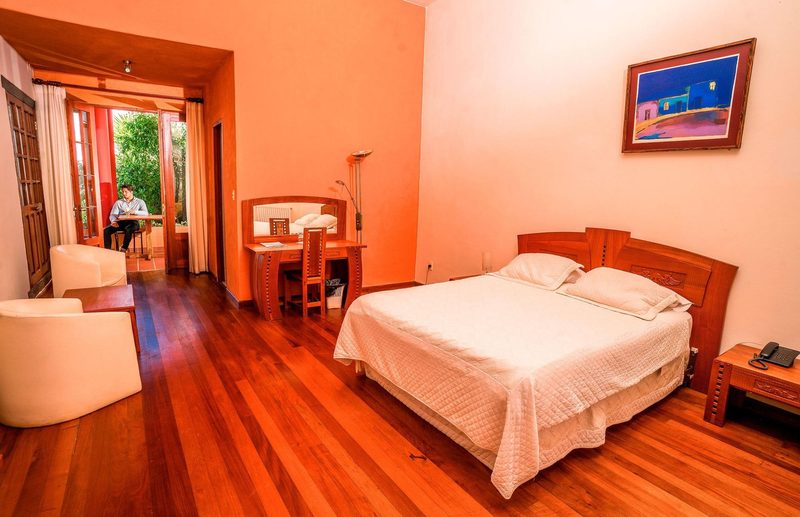
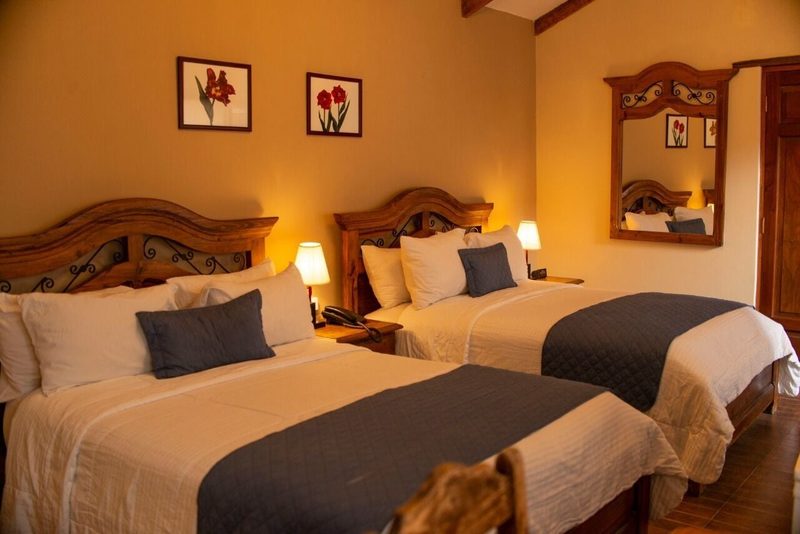
Where to Stay in Sucre in June
Hand-picked hotels across price tiers for June travellers.
Public Holidays in June
Dates that affect opening hours, transport and crowds
Año Nuevo Andino
Known in English as Andean New Year. Observed nationwide as a public holiday.
Corpus Christi
Observed nationwide as a public holiday.
Año Nuevo Andino
Known in English as Andean New Year. Observed nationwide as a public holiday.
Packing Checklist
Bookmark this page — your progress is saved between visits
Need the full list with shopping links?
Climate-specific gear, brand recommendations, and what to leave at home.
View Sucre Packing List →Essential Tips
Insider knowledge and common pitfalls to avoid
Insider Knowledge
Spend at least two full days in Sucre before attempting any trek or the Uyuni trip. The city sits at 2,810 m (9,220 ft). Jumping straight into physical activity at altitude, if you have flown in from sea level via Santa Cruz, is how people end up spending their trip in bed with splitting headaches. Locals will tell you to drink mate de coca, coca leaf tea. The mild numbing warmth of it does help with the nausea and breathlessness that most newcomers feel for the first day or so. Take the advice.
The Mercado Central is where Sucre eats. The comedores on the upper floor serve almuerzo completo, a soup course, a main plate, and a drink, that is honest, filling, and costs a fraction of what the tourist-facing restaurants on the plaza charge. Point at what looks good. Sit down. Eat what arrives. June's cold mornings make the sopa de mani, peanut soup, richer and more savory than it sounds, thickened with ground peanuts and served over rice, the right first order. The warmth spreads through you in a way that coffee never manages at this altitude.
If you only have three days in June, spend day one acclimatizing slowly in the colonial center and museum circuit with long breaks in sunny courtyards. Day two is for the Maragua crater trek if you feel strong at altitude. Day three goes to Parque Cretacico in the morning and a cooking class in the afternoon, or swap day three for the Tarabuco Sunday market if your dates line up. The Uyuni salt flat trip requires at least two additional days. Treat it as a separate expedition rather than crammed into a Sucre visit.
Evenings in June Sucre are quiet and cold. That turns out to be the charm. Locals gather in peñas, small live music venues playing Bolivian folk music on charango, zampoña, and bombo drums, where the warmth of a packed room, the vibration of a charango string you can feel in your chest, and a glass of singani, Bolivia's grape brandy, sharp and floral, make the cold streets outside irrelevant. Ask at your accommodation which peñas are playing that week. Schedules rotate. Nothing is reliably posted online.
Avoid These Mistakes
Sucre feels manageable. The city is compact, walkable, civilized. But at 2,810 m (9,220 ft), oxygen levels sit roughly 27% below sea level. Travelers who hit the ground running, walking eight hours straight, often crash hard on day two. Headaches. Fatigue. The cold dry air hides the effort. You are not sweating. Your body works harder than it admits.
Pack for two seasons. June mornings in Sucre are brutal. Travelers shiver at 7 AM in t-shirts and light jackets meant for generic South America. The 21°C (69°F) afternoon arrives. So does the 4°C (40°F) dawn. The shift happens within an hour of sunset. Carry winter layers AND summer layers. Wear both daily.
Forget European dinner hours. Sucre runs on Bolivian time. Almuerzo, the main meal, hits between noon and 2 PM. Restaurants serve their best food then. Their best value too. Dinner stays lighter, later. Many small comedores shut after lunch. Arrive at 7 PM expecting a full menu. You will leave hungry. Finding food after dark takes local knowledge.
Short on time? See day trips around Sucre on GetYourGuide.
Ready to plan your trip to Sucre?
Now that you've got the research covered, here's where to go next.
Explore More Activities in Sucre
Didn't see anything interesting yet?
Browse Viator's full catalog of tours, day trips, food experiences, and private guides in Sucre.
See All Sucre Tours on Viator